
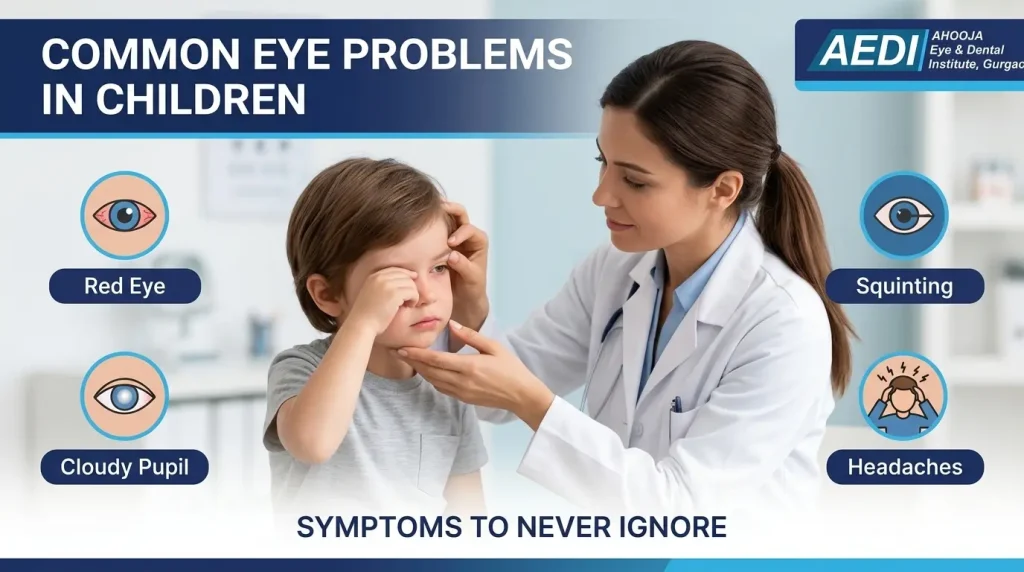
Is your child rubbing their eyes frequently, sitting too close to the TV, or complaining about blurred vision? Many parents assume these are temporary habits, but delaying an eye examination can allow a small problem to become a lifelong vision issue. Since children often cannot explain what they are seeing, many eye conditions remain unnoticed until they begin affecting learning, confidence, or daily activities.
At the best Paediatric hospital in Gurugram, early diagnosis and timely treatment help protect your child’s eyesight during the years when vision is still developing. The experienced ophthalmology team at Ahooja Eye and Dental Institute provides comprehensive eye examinations and child-friendly care for infants, toddlers, school-going children, and teenagers across Gurugram and nearby areas.
Whether your child has difficulty reading, frequent headaches, crossed eyes, excessive tearing, or poor school performance, recognising the warning signs early can make all the difference. In this guide, we’ll explain the most common eye problems in children, their symptoms, causes, treatment options, and when it’s time to consult the best Paediatric doctor in Gurugram.
Why Children’s Eye Health Matters
Nearly 80% of a child’s learning happens through vision. Healthy eyesight plays a vital role in:
- Reading and writing
- Classroom performance
- Sports participation
- Hand-eye coordination
- Social interaction
- Brain development
Many childhood eye disorders progress silently. Regular eye examinations help detect problems before they become permanent.
Common Eye Problems in Children
1. Refractive Errors
This is the most common childhood eye condition.
It includes:
- Nearsightedness (Myopia)
- Farsightedness (Hyperopia)
- Astigmatism
Symptoms
- Squinting
- Sitting very close to TV
- Holding books too close
- Frequent headaches
- Blurred vision
- Poor school performance
Treatment usually involves prescription glasses or contact lenses in suitable cases.
2. Lazy Eye (Amblyopia)
Amblyopia occurs when one eye develops weaker vision because the brain favors the other eye.
Symptoms
- Poor depth perception
- Wandering eye
- Tilting the head
- Difficulty focusing
Early treatment before age 7–8 offers the best outcomes.
Treatment may include:
- Eye patching
- Corrective glasses
- Vision therapy
- Surgery (in selected cases)
3. Squint (Strabismus)
A squint causes the eyes to point in different directions.
Parents may notice:
- Crossed eyes
- One eye drifting outward
- Closing one eye in sunlight
- Head tilting
Ignoring strabismus can lead to permanent lazy eye.
4. Blocked Tear Duct
Very common in newborn babies.
Symptoms include:
- Constant watering
- Sticky eye discharge
- Crusting around eyelids
Most improve naturally, while some children require a simple procedure.
5. Conjunctivitis (Pink Eye)
A highly common eye infection.
Symptoms:
- Red eyes
- Swelling
- Watering
- Sticky discharge
- Itching
Treatment depends on whether the infection is bacterial, viral, or allergic.
6. Allergic Eye Disease
Children frequently develop eye allergies due to:
- Dust
- Pollen
- Pollution
- Pet dander
Symptoms:
- Itching
- Watering
- Redness
- Frequent eye rubbing
Avoid rubbing the eyes as it may worsen the condition.
7. Digital Eye Strain
Increasing screen exposure has led to more children experiencing digital eye fatigue.
Symptoms include:
- Dry eyes
- Eye strain
- Headaches
- Blurred vision
- Neck pain
Parents should encourage regular screen breaks using the 20-20-20 rule.
8. Childhood Myopia
Myopia is increasing rapidly worldwide.
Signs include:
- Difficulty seeing the classroom board
- Sitting close to television
- Frequent blinking
- Squinting
Early myopia management can slow progression and reduce future eye health risks.
9. Childhood Cataract
Although uncommon, cataracts can occur in infants or children.
Symptoms:
- White pupil
- Poor vision
- Nystagmus
- Eye misalignment
Prompt diagnosis is essential to preserve vision.
10. Rare Retinal Disorders
Some inherited or developmental retinal diseases may present with:
- Poor night vision
- Poor visual tracking
- White reflex in photographs
- Delayed visual development
Immediate evaluation by a pediatric ophthalmologist is recommended.
Symptoms Every Parent Should Never Ignore
Seek an eye examination immediately if your child experiences:
- Persistent eye rubbing
- Crossed eyes
- White reflection in the pupil
- Frequent headaches
- Excessive tearing
- Eye pain
- Light sensitivity
- Redness lasting more than two days
- Blurred vision
- Double vision
- Difficulty reading
- Holding books very close
- Tilting the head while watching TV
- Poor classroom performance related to vision
These symptoms should never be ignored.
Causes and Risk Factors
Children may develop eye problems due to:
- Family history
- Premature birth
- Excessive screen time
- Eye injuries
- Vitamin deficiencies
- Genetic conditions
- Eye infections
- Poor visual habits
How Eye Problems Are Diagnosed
At Ahooja Eye and Dental Institute, pediatric eye evaluations may include:
- Vision assessment
- Refraction testing
- Eye alignment evaluation
- Slit lamp examination
- Retina examination
- Eye pressure testing when required
- Dilated eye examination
The clinic uses child-friendly techniques to make the examination comfortable.
Treatment Options
Treatment depends on the specific condition.
Glasses
Correct refractive errors and improve learning performance.
Eye Patching
Used to strengthen vision in lazy eye.
Eye Drops
Prescribed for allergies, infections, or inflammation.
Vision Therapy
Improves eye coordination and focusing ability.
Surgery
Recommended for selected conditions including:
- Squint
- Congenital cataract
- Blocked tear duct
- Certain retinal disorders
Prevention Tips
Parents can protect their child’s eyesight by:
- Scheduling regular eye examinations
- Limiting screen time
- Encouraging outdoor activities
- Providing a balanced diet rich in Vitamin A, C, and Omega-3
- Maintaining good hygiene
- Preventing eye injuries during sports
- Ensuring adequate lighting while studying
When Should Parents Visit an Eye Doctor?
Book an appointment immediately if your child:
- Cannot see the classroom board
- Complains of blurry vision
- Has repeated headaches
- Shows crossed eyes
- Has frequent eye infections
- Experiences sudden vision changes
- Has an eye injury
- Has a family history of childhood eye disease
Routine eye examinations are also recommended even if there are no obvious symptoms.
Why Choose Ahooja Eye and Dental Institute in Gurugram?
Parents across Gurugram, Sector 6, Ashok
Parents across Gurugram, Sector 6, Ashok Puri, New Railway Road, Bhim Nagar, Palam Vihar, DLF, Sushant Lok, Sohna Road, Golf Course Road, South City, and nearby areas trust Ahooja Eye and Dental Institute for comprehensive pediatric eye care.
Our strengths include:
- Experienced team of ophthalmologists
- Child-friendly examination environment
- Modern diagnostic technology
- Comprehensive pediatric eye services
- Personalized treatment plans
- Convenient central Gurugram location
- Focus on early diagnosis and preventive care
If you are searching for the best eye hospital in Gurugram or the best Paediatric doctor in Gurugram, our dedicated team is committed to helping children achieve healthy vision for life.
Clinic Address:
560/1, New Railway Road, Opposite Bhim Nagar, Ashok Puri, Sector 6, Gurugram, Haryana – 122001
Phone: 081307 84234
Clinic Hours: Monday–Saturday: 8:30 AM–5:30 PM | Sunday Closed
Final Thoughts
Children rarely complain about vision problems because they may not realize their eyesight is different from others. Paying attention to subtle warning signs and arranging timely eye examinations can prevent long-term complications and support healthy visual development.
If you notice any concerning symptoms or simply want reassurance about your child’s eye health, schedule a comprehensive pediatric eye examination at Ahooja Eye and Dental Institute. Our experienced ophthalmology team is dedicated to providing compassionate, evidence-based care for children across Gurugram and surrounding areas.
Medical Disclaimer: This article is intended for informational purposes only and should not be considered a substitute for professional medical advice, diagnosis, or treatment. Always consult a qualified ophthalmologist regarding concerns about your child’s eye health.
Frequently Asked Questions
1. What is the most common eye problem in children?
Refractive errors such as myopia, hyperopia, and astigmatism are the most common childhood eye conditions.
2. At what age should my child have their first eye examination?
Children should undergo regular vision screening during infancy and preschool years, followed by comprehensive eye examinations as advised by an ophthalmologist.
3. Can excessive mobile phone use affect my child’s eyesight?
Long periods of screen time can contribute to digital eye strain, dry eyes, and may influence myopia progression in susceptible children.
4. How do I know if my child needs glasses?
Squinting, headaches, sitting close to screens, poor reading performance, and blurred vision are common indicators.
5. Can lazy eye be cured?
Yes. Early diagnosis and treatment significantly improve outcomes.
6. Is squint normal in babies?
Occasional eye misalignment in newborns may be normal, but persistent squint after a few months should be evaluated.
7. How often should children have eye examinations?
Frequency depends on age, family history, and existing eye conditions. Your ophthalmologist can recommend an appropriate schedule.
